Senior Nonprofit Leaders Aren’t Burned Out — Their Roles Are Structurally Overloaded
Senior nonprofit leaders are often told they’re burned out.
It’s a familiar diagnosis. It’s also usually wrong.
Burnout assumes the problem lives inside the leader — resilience, mindset, recovery. But for Executive Directors, CEOs, and Artistic Directors, stress rarely comes from a lack of commitment or capacity. It comes from how the role itself has been constructed over time.
In mission-driven organizations, responsibility doesn’t just grow — it accumulates.
During moments of crisis, transition, or under-resourcing, senior leaders step in. Decisions escalate upward. Boundaries soften. Availability increases. The organization stabilizes — but at a cost.
What rarely happens is the reset.
The responsibilities absorbed during crisis are never fully returned. Decision authority quietly concentrates. Escalation becomes the default path to resolution. Over time, the senior leader becomes the organization’s backstop — not because they’re failing, but because the system depends on them to compensate.
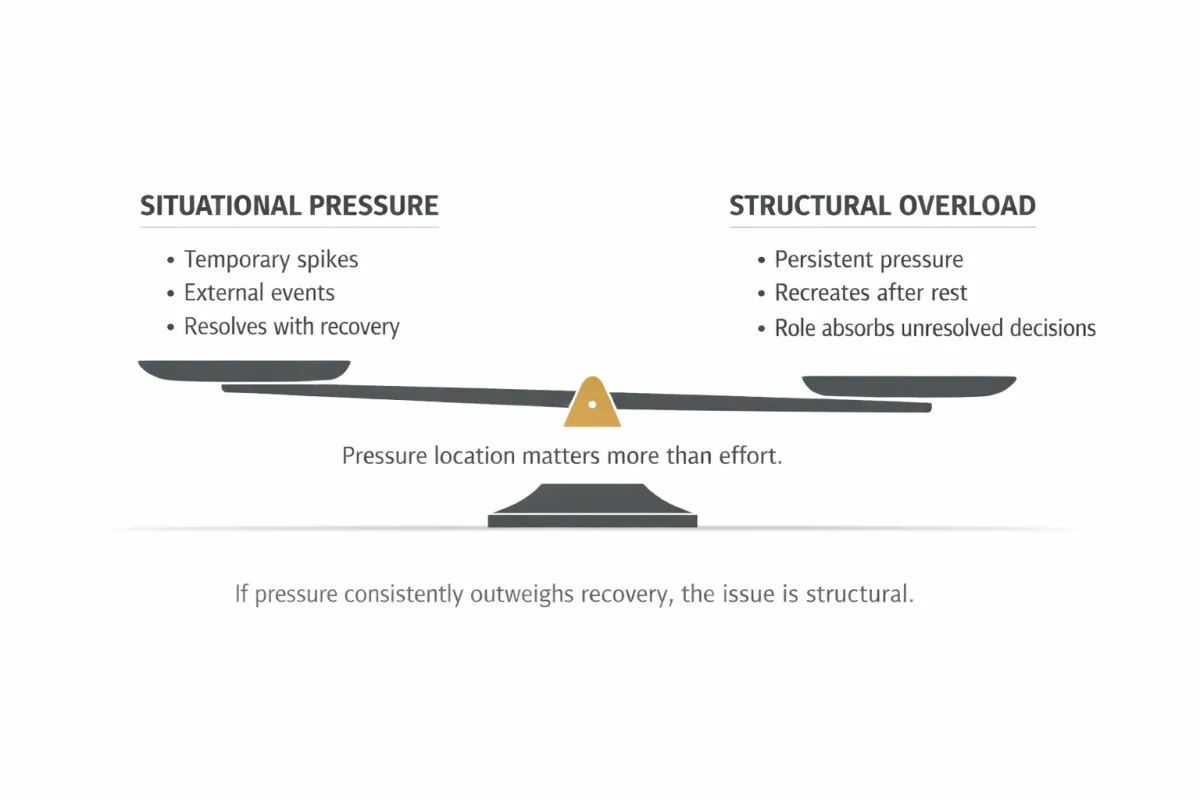
Many nonprofit leaders notice something unsettling: even after rest, vacation, or recommitment, the pressure comes back.
That’s not a failure of recovery. It’s a signal.
When urgency and decision-making are structurally misaligned, pressure is recreated the moment the leader returns. The role is still load-bearing. The system still pulls unresolved issues upward. Nothing has changed except the leader’s energy level.
This is why stress management advice often feels irrelevant at senior levels. The issue isn’t effort. It’s architecture.
Structural overload doesn’t mean leaders should disengage or lower standards.
It means the organization has unintentionally trained itself to rely on one role to absorb ambiguity, urgency, and risk. That pattern is unsustainable — not just for the leader, but for the mission.
When senior nonprofit leaders begin examining where decisions land, why urgency escalates, and how responsibility flows, something important happens:
Stress starts to decrease without requiring more personal sacrifice.
Before trying to fix stress, senior nonprofit leaders need to determine what kind of stress they’re dealing with.
Situational pressure and structural overload look similar — but require very different responses.
Insight alone won’t interrupt structural pressure.
But accurate diagnosis is the first step toward relief that actually holds.
Most senior nonprofit leaders don’t need more resilience. They need roles that no longer depend on personal overextension to function.